The Youth Programme is part of the Social and Human Science sector and a priority group for UNESCO. The United Nations, for statistical purposes, defines ‘youth’ as those persons between the ages of 15 and 24 years, without prejudice to other definitions by Member States. Recognizing youth creativity, innovation and capacity to make change happen in the world, UNESCO firmly believe that young people are crucial actors, leaders, and partners. UNESCO’s objective is to help empower young people, reaching out to them, responding to their expectations and ideas, fostering useful and long-lasting skills. UNESCO encourages:
Participation of young women and men in its programmes
Partnerships between UNESCO and young people’s networks and organizations
Integration of youth concerns and issues into the policy agendas of Member States
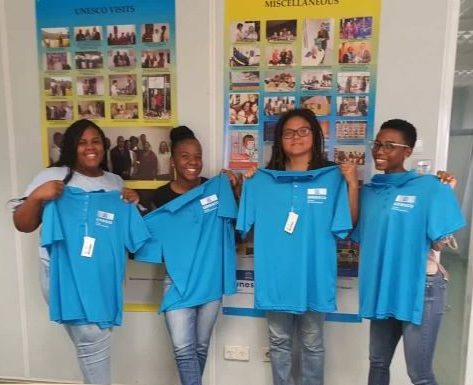
In order to involve more youth in the UNESCO Youth Programme under the coordination of the National Committee Member for Youth, a youth committee was established with the aim to make known the Youth Programme and to get the Curaçao youth involved in activities concerning youth. The Youth Committee will advise the Curaçao National Commission on themes that are of importance to young people.
UNESCO Curaçao Youth Members
Do you have an affinity with any of the below:
• They provide guest lectures at schools and thus collect input for the Commission. • Member of a youth organization • Good general development • Good communication skills • Between the ages of 16-25/30 • Good command of English, Papiamento and Dutch • Writing skills in English, Papiamentu and Dutch • Being able to present oneself in public (Public Speaking) • Being able to work in a team • Discipline and responsibility in performing work related to UNESCO • Knowledge about points of interest that are important for youth (Education, Science, Culture, Communication and Information) • Be representative of the youth in the country • Experience of participating in workshops; conferences and more • Prepare to represent the National UNESCO Commission Curaçao locally, nationally and internationally
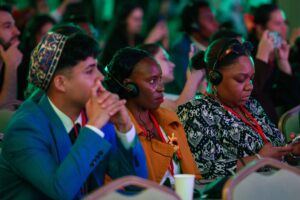
Every two years prior to the General Conference of UNESCO, the Youth Forum takes place. Participants are selected young persons from the Member and Associate Member States. Each edition comes with a theme, providing the youth with a space to engage in discussion & debate about, and to share recommendations & solutions with Member States during UNESCO’s General Conference.
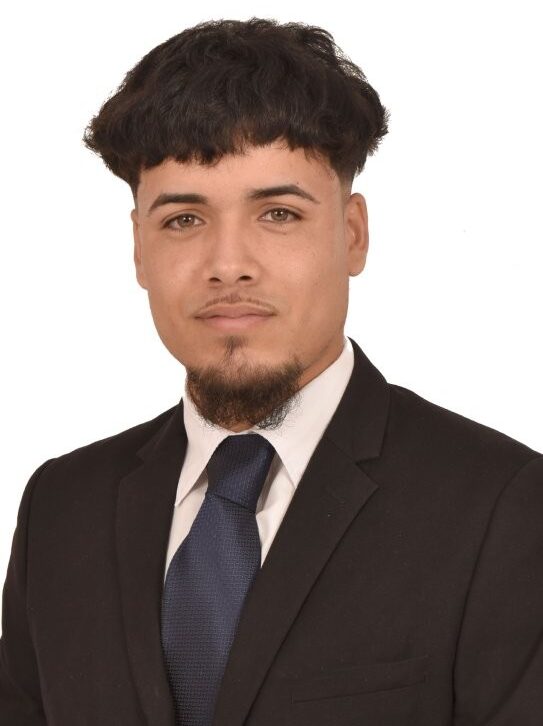
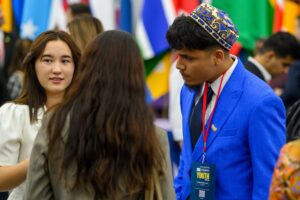
Curaçao was proudly represented by Luis Alberto Placencio Villalobos, a 25-year-old International Business student from Curaçao. He is passionate about community development, an actively volunteer through various local service clubs and has also taken part in international volunteer work, including a two-week program in Sweden. Luis is deeply committed to using his skills and experiences to drive positive change both locally and globally.
Mr Luis Alberto Placencio Villalobos
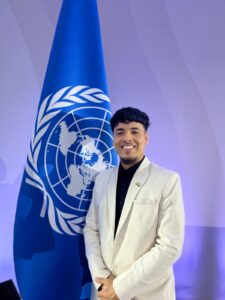
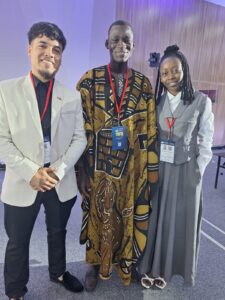
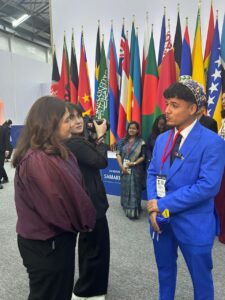
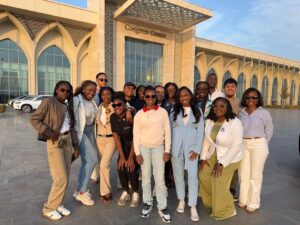
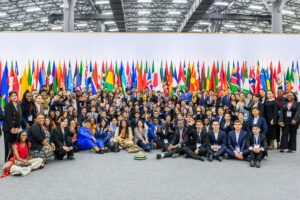
During the forum Luis engaged in meaningful dialogue, broadened international connections, and showcased the dedication and potential of Curaçao’s youth. Luis stood proudly beside the United Nations flag, connected with passionate youths from Mali and Togo, shared his insights during an interview with Uzbekistan TV and took several a group photo of all participants.
13th Youth Forum
In 2023, the UNESCO Youth Forum focused on the Social Impacts of Climate Change and the need to achieve an equitable climate transition.
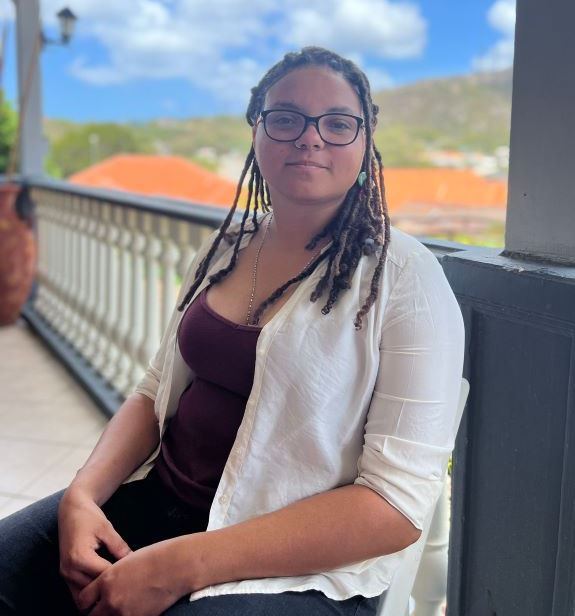
Curaçao was represented at the 13th UNESCO Youth Forum by Ms Tiara de Doelder, a forensic analyst who was researching how everyone from local gardeners to large municipalities can discover the human and environmental health benefits of healthy soil. Her interest in nutrition and ethnobotany grew during the years, so she sought a job related to the food industry. After working at a food laboratory, she returned home from abroad and noticeable changes in the island’s environment, have led Tiarah to start her own company TD Forensic Analytics with the mission to combat these local ecological imbalances. She also created social projects like an ethnobotanics database where the data for local plant use is being documented and published. The database is an attempt to cure plant blindness on the island. This database has led to her leading a project approved by UNESCO through the Participation Programme to rebuild traditional craftsmanship in the area of culture, implementing thus part of the Intangible Cultural Heritage Convention. After Tiarah’s participation at the 13th UNESCO Youth Forum, she is currently leading a project approved by UNESCO through Participation Programme named MicroMondi: A Youth-Led Initiative to Restore Ecological Balance in Curaçao.
Ms Tiarah de Doelder Curaçao representative at 13th UNESCO Youth Forum
Project
Man and The Biosphere Youth Forum
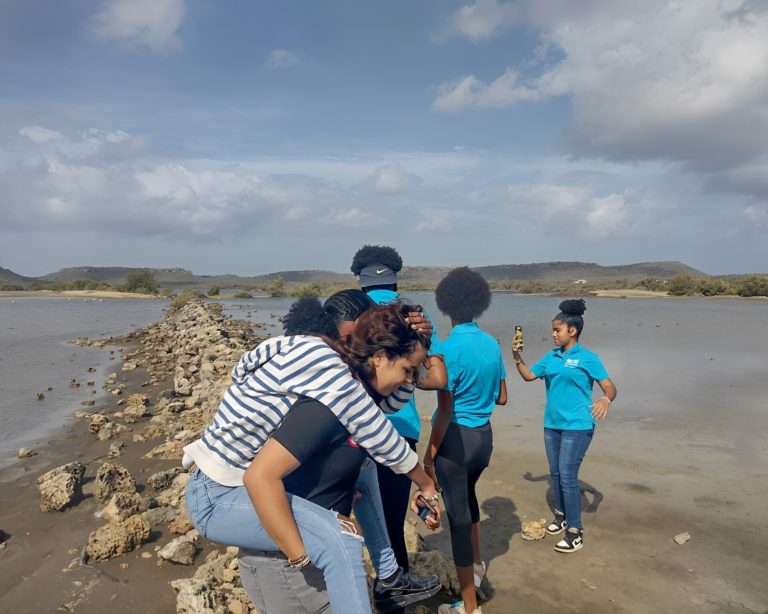
The Curaçao National Commission with UNESCO’s support has been actively promoting the introduction and establishment of the Biosphere Reserve vision in the country for the last 7 years; the Commission held planning and training workshops on the Man and the Biosphere Programme and Biosphere Reserves. In order to get the youth involved a project was submitted to UNESCO via the Participation Programme to organize workshops and trainings for youth on the island and off the island with the Youth section in Jamaica and the Regional Office for Science in Montevideo and with the participation of other youth.
Logo MAB Youth Forum
The objective of the Man and the Biosphere Youth Forum was to seek to accomplish the following objectives: 1. Educate, students about features of the Middle Curaçao Biosphere Reserve through interactive sessions, workshops practical activities and the use of modern technology. 2. Obtaining the views of the general public on environment and development issues through facilitating two-way feedback, through research activities, opinion surveys, talk shows and other activities, supported by radio, television, social media, including face book, twitter, WhatsApp, and Instagram, and print media. 3. Encouraging young islanders to discuss environment, social entrepreneurship and social cultural issues among themselves using new technologies. 4. Exploring and understanding the basic science and social impacts of climate change, and sustainable development as it relates to the proposed territory of the Middle Curaçao Biosphere Reserve. 5. Create further awareness of the proposed territory of the Middle Curaçao Biosphere Reserve.